A concrete landscape border is a small feature that changes how a whole yard looks and behaves. It draws a clear line between lawn and planting, keeps mulch and rock where they belong and gives the front of a property a finished edge that reads from the street. Because a border is permanent once it cures, the choices made before installation matter. This guide walks through the decisions that shape a good border on a South Florida property, from type and profile to color, layout and upkeep, and ends with the questions worth raising during an estimate.
What a border actually does
It helps to start with the job a border is meant to do, because the right style follows from it. Most owners want some combination of four things.
- Containment. Mulch, pea gravel and white rock drift with rain, foot traffic and mowing. A border holds that material inside the bed.
- Separation. Grass creeps into beds and planting spills onto lawns. A visible edge makes the boundary obvious and easier to maintain.
- Protection of hard surfaces. Beds that sit beside a driveway or walkway tend to shed soil and rock onto them. An edge along that line keeps the pavement cleaner.
- Appearance. A consistent, deliberate outline makes planting look designed rather than accidental, especially along the front of a home.
If containment of loose rock is the main goal, the border needs enough height above the bed surface to hold it. If the priority is easy mowing, a flatter edge that a mower wheel can ride along may be the better fit. Knowing which matters most narrows every later choice.
Poured curbing or block borders
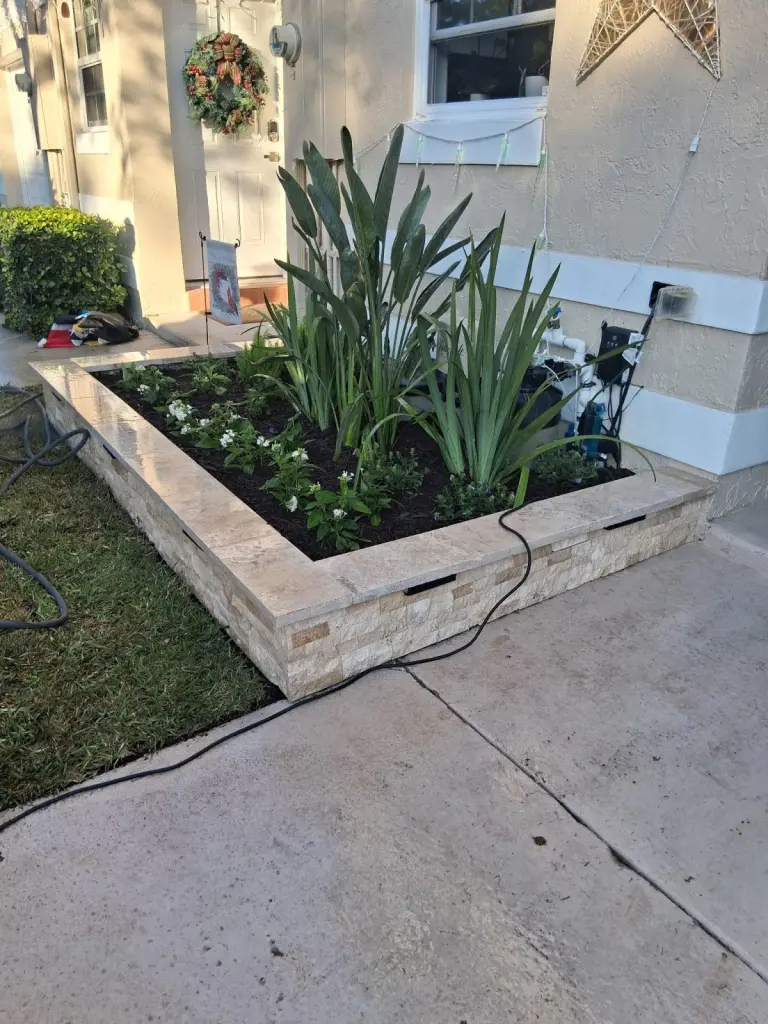
Residential borders generally fall into two families. The first is continuous concrete curbing, which is formed in place along the planned line so it follows curves smoothly without visible joints between separate pieces. The second is a built border made from individual units, such as veneer block or stacked stone, which gives a more architectural look and can be built up into raised planters.
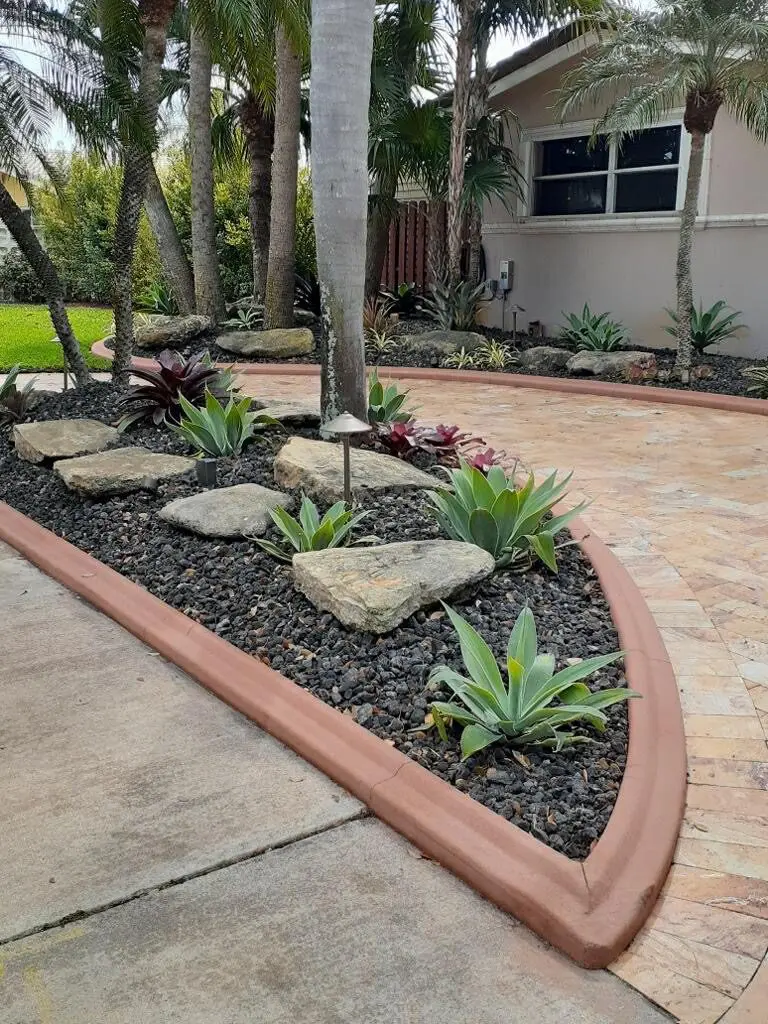
Continuous curbing suits sweeping curves, long runs beside lawns and rings around trees. Block and veneer borders suit squared planters, entry beds and places where a raised edge or a stone texture complements the house. Many properties use both: curbing along the lawn and a veneer planter at the front door.
Profile: the shape of the edge
The profile is the cross-section of the border, and it has a practical effect. A low, wide edge gives mower wheels a track to follow, so the grass beside it can be cut cleanly without a separate trimming pass. A taller, curb-like profile stands above the bed and holds rock and mulch better, but it needs to be trimmed along on the lawn side. Angled or slanted faces fall somewhere in between.
When comparing profiles, picture the finished bed rather than the bare border. Once mulch or rock is added, the visible height shrinks. A profile that looks generous on installation day can almost disappear after a season of topping up the bed, so ask how much of the border will show once the bed is filled.
Patterns and textures
Plain concrete curbing has a clean, modern look. Stamped or textured curbing adds a pattern pressed into the surface while the concrete is still workable, often imitating brick, slate or stone. Pattern choice is mostly about style, but it also affects how the border wears visually: textured surfaces can hide small marks and dirt better than a smooth face.
A good way to choose is to look at the house first. A stucco home with a barrel-tile roof often pairs well with a warm, textured border. A contemporary exterior with large windows and grey pavers may suit a smooth or subtly textured edge in a cooler tone. If the property already has pavers, a border pattern that echoes their shape or color ties the two together.
Choosing a cement color
Color is the choice owners most often revisit, so it deserves time. Consider everything the border will sit beside: the roof, the paint color, the driveway or pavers, the rock or mulch in the bed and the planting itself. Terracotta and tan tones warm up a yard and flatter red mulch and tropical foliage. Greys and charcoals look crisp against white rock and green lawns. Very light borders stand out strongly, which can be the intent or can draw attention away from the planting.
Look at color samples outdoors in daylight, next to the materials they will actually touch. Colors read differently in strong sun than they do on a screen or under indoor light. It is also worth asking how the color is applied. Pigment mixed through the concrete and color applied to the surface behave differently as a border ages and gets scuffed, and an installer can explain which method they use and why.
Planning the layout
The line a border follows is as important as the border itself. Before an estimate, walk the yard and think about how the beds should relate to the house, the lawn and the paths people actually use.
- Curves or straight lines. Gentle curves soften corners and make beds feel natural. Tight wiggles are harder to mow around and can look busy. Straight lines suit formal entries and modern homes.
- Bed depth. A bed that is too shallow leaves plants crowded against the house. Leave room for mature shrubs and palms, not only their size today.
- Tree and palm rings. Rings look best when they are sized in proportion to the tree and leave space around the base of the trunk. Circles, squares and decorative shapes are all possible.
- Transitions. Decide how the border meets the driveway, the walkway and the house. Clean junctions at these points make the whole job look finished.
- Access. Leave a practical way for mowers, wheelbarrows and hoses to move between areas without climbing over edges.
A garden hose or a length of rope laid on the ground is an easy way to test a curve before committing. Look at it from the street, from the front door and from the windows you use most.
South Florida considerations
Local conditions add a few points to the checklist. Heavy summer downpours move a lot of water across a yard in a short time. A continuous border can change where that water flows, so think about low spots, downspouts and the path runoff takes away from the house. Mention any areas that already puddle so the layout can account for them.
Irrigation is another common factor. Many properties have sprinkler heads and supply lines running close to existing beds. Knowing where they are helps avoid damage and makes it easier to keep heads spraying the right side of a new edge. Palms and large trees bring roots near the surface, which affects where a ring can sit.
Many South Florida neighborhoods also have homeowners associations with rules about exterior changes. If your property is in an association, check whether border work, colors or layout changes need approval before scheduling. Any project that involves digging should also account for underground utilities, so ask who will handle utility locate requests before work starts.
Living with a border
Concrete borders need little attention, but a few habits keep them looking good. Keep string trimmers from striking the face of the border, since repeated contact can mark it. Top up mulch and rock so the surface stays a little below the top edge rather than spilling over. Rinse or gently clean borders that sit in the path of sprinklers or runoff if staining appears, and ask your installer whether they recommend sealing for the style and color you choose.
Questions to raise during an estimate
An estimate visit is the best time to settle the details. These questions help make sure you and the installer are picturing the same result.
- Which border type and profile suit each bed, and why?
- Which patterns and colors do you offer, and can I see samples outdoors?
- How will the border handle drainage around the house and low spots?
- What happens to existing edging, rock, mulch and plants before work begins?
- How will irrigation lines and sprinkler heads be protected or adjusted?
- How should the area be treated while the concrete cures?
- What is included in the estimate, and what would count as a change?
To see the forms borders take on real properties, browse the concrete border styles and the project gallery. If you are getting ready to ask for a price, the guide on what to prepare before requesting a landscaping estimate covers photos, measurements and priorities, and the estimate request form takes the first step.